Skills Employers Value More than Ever in 2026
 Frances Gallagher
The Skills Nobody Taught Us at School (But Employers Still Want) ...
The Skills Employers Value More Than Ever in 2026
I thought what I'd do today is take us back to our school days for a moment.
Can you imagine a Leaving Cert subject called 'How to Deal with Difficult People'?
Or perhaps 'Managing Stress on a Monday Morning'?
What about 'How Not to Panic During a Job Interview'?
I don't remember seeing any of those on my timetable, and believe me, I attended enough schools to know.
In fact, I went to nine schools altogether - six primary schools and three secondary schools.
Yet despite all those years in classrooms, many of the skills I use every day in business and work weren't formally taught at all.
Can you remember sitting in a classroom wondering whether you'd ever use some of the things you were learning?
- Perhaps it was algebra.
- Perhaps it was trigonometry.
- Latin - yes, I was that soldier.
- Perhaps it was trying to remember historical dates for an exam.
Now before any maths teachers come after me, I'm not saying these subjects weren't important.
They absolutely were.
But have you ever noticed that many of the skills we use every day at work were never actually taught in school?
I certainly don't remember anyone teaching us how to write professional emails or survive a packed inbox on a Monday morning, but remember, my experience was pre-email.
Yet these are often the very skills employers tell us they value most.
So why is that?
Let's have a look.
The Question People Have Been Asking for Decades
This isn't a new discussion.
In fact, educators, employers and authors have debated it for years.
One person who spoke frequently about this was Sir Ken Robinson.
He argued that while schools do a wonderful job teaching academic subjects, they don't always place enough emphasis on creativity, communication, collaboration and practical life skills.
His bestselling book, The Element, encouraged people to discover their strengths, talents and passions rather than measuring success solely through exam results.
Think about that for a moment.
How many people do you know who were average students but went on to become excellent managers, entrepreneurs, trainers, customer service professionals or business owners?
Quite a few, I'd imagine.
So what does this tell us?
Success is about far more than what appears on a report card.
Employers Want More Than Qualifications
Now don't get me wrong - Qualifications matter - that is the area I work in.
They demonstrate knowledge, commitment and achievement.
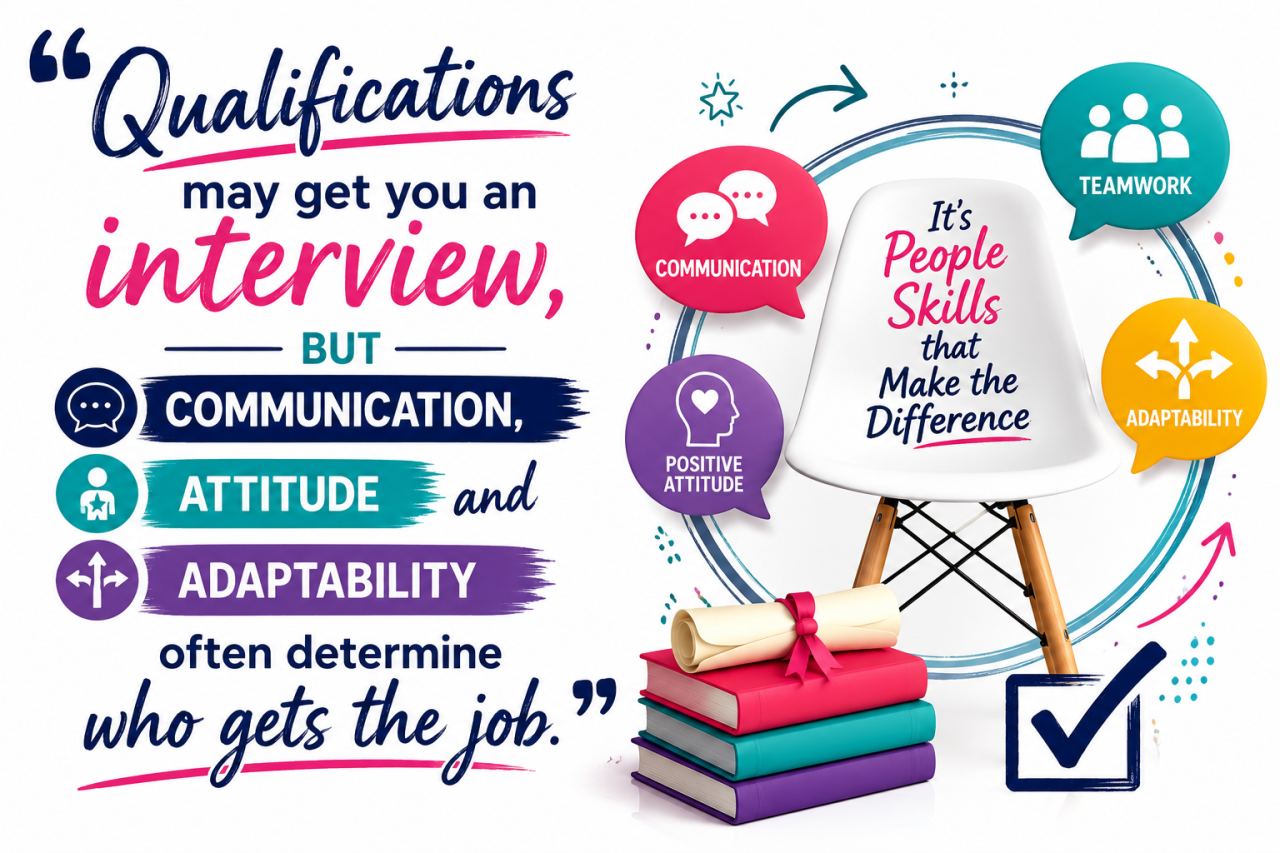
But employers often look beyond certificates and grades, and again, that's my own experience having run a Recruitment Agency for 10 years here in the Midlands in the early 90s. Having interviewed hundreds of candidates over ten years in recruitment, I learned very quickly that qualifications opened doors, but communication, attitude and reliability often decided who got the job.
So imagine two candidates applying for the same position.
- Both have similar qualifications.
- One communicates clearly, works well with others, manages their time effectively and remains calm under pressure.
- The other struggles in these areas.
Who do you think the employer is likely to choose?
The answer is usually obvious.
As workplaces continue to evolve, employers increasingly look for people who combine technical knowledge with practical workplace skills.
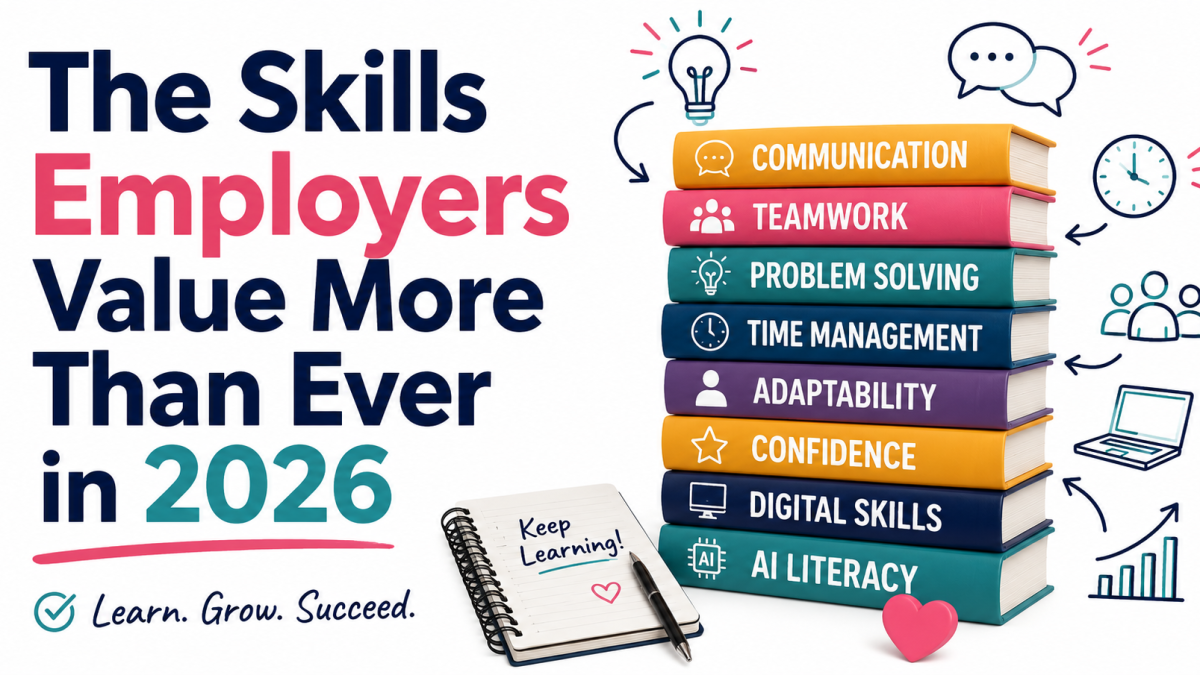
1. Communication Skills
If there is one skill that appears on almost every employer wish list, it's communication.
We all communicate every day.
But workplace communication is about much more than simply talking.
It's about:
- Listening carefully
- Understanding instructions
- Writing clearly
- Presenting ideas
- Handling difficult conversations professionally
- And more crucially, not being afraid to speak up!
Many years ago, How to Win Friends and Influence People became one of the most successful personal development books ever written.
Why?
Because it focused on understanding people, building relationships and communicating effectively.
Almost ninety years later, those same skills remain just as valuable.
- Technology has changed.
- Human nature hasn't.
These are exactly the types of practical skills we help learners develop through our Communications courses.
2. Time Management
Can anyone remember a subject called "Managing Twenty Tasks at Once While Three People Need You Immediately"?
No?
Neither can I.
Yet this is often what modern workplaces feel like.
Time management helps us:
- Meet deadlines
- Stay organised
- Reduce stress
- Prioritise important work
- Improve productivity
Many people assume time management is a personality trait.
- It's not.
- It's a skill.
Like any skill, it can be learned, practised and improved.
3. Problem-Solving
No workplace operates perfectly.
- Computers crash.
- Customers complain.
- Deliveries arrive late.
- Plans change.
- Unexpected problems appear when we least expect them.
The people employers value most are often those who can remain calm and focus on solutions rather than becoming overwhelmed by problems.
Problem-solvers tend to ask:
- What's causing the issue?
- What options do we have?
- What's the best solution?
- How can we prevent it happening again?
These skills are useful whether you're working in administration, healthcare, retail, management or running your own business.
4. Teamwork
Very few jobs exist in isolation. Even if you're working independently, you're still part of a larger team. Think about a typical office - Reception staff, administrators, managers, payroll personnel and customer service teams all rely on each other.
When teamwork is strong:
- Work gets completed faster
- Communication improves
- Problems are solved more quickly
- Workplace morale increases
Employers know that technical skills can often be taught.
Attitude and teamwork are much harder to develop.
5. Confidence and Self-Belief
This is perhaps one of the most overlooked workplace skills of all. Confidence doesn't mean being the loudest person in the room.
It means:
- Speaking up when necessary
- Asking questions
- Taking initiative
- Being willing to learn
- Accepting feedback positively
Many adult learners tell us they lack confidence when returning to education. The interesting thing is that confidence usually grows through learning.The more we learn, the more capable we feel. The more capable we feel, the more opportunities we pursue. It's a positive cycle.
These courses naturally align with employability skills: 5N1610 Business Administration Skills, 5N0972 Customer Service Skills, 5N1407 Reception and Frontline Office Skills
6. Emotional Intelligence
Here's one that wasn't discussed much years ago but is now hugely important. In his influential book, Emotional Intelligence, Goleman argued that success often depends on much more than academic intelligence.
He highlighted skills such as:
- Self-awareness
- Empathy
- Relationship building
- Managing emotions
- Understanding others
Think about the best manager, teacher, colleague or supervisor you've ever worked with. Chances are they demonstrated many of these qualities.
7. AI Literacy
Let's have a look at something that wasn't even part of the conversation a few years ago.
Artificial Intelligence.
Now, whenever people hear the term AI, there can sometimes be a bit of panic.
"Will AI take my job?"
"Will computers replace people?"
They're fair questions.
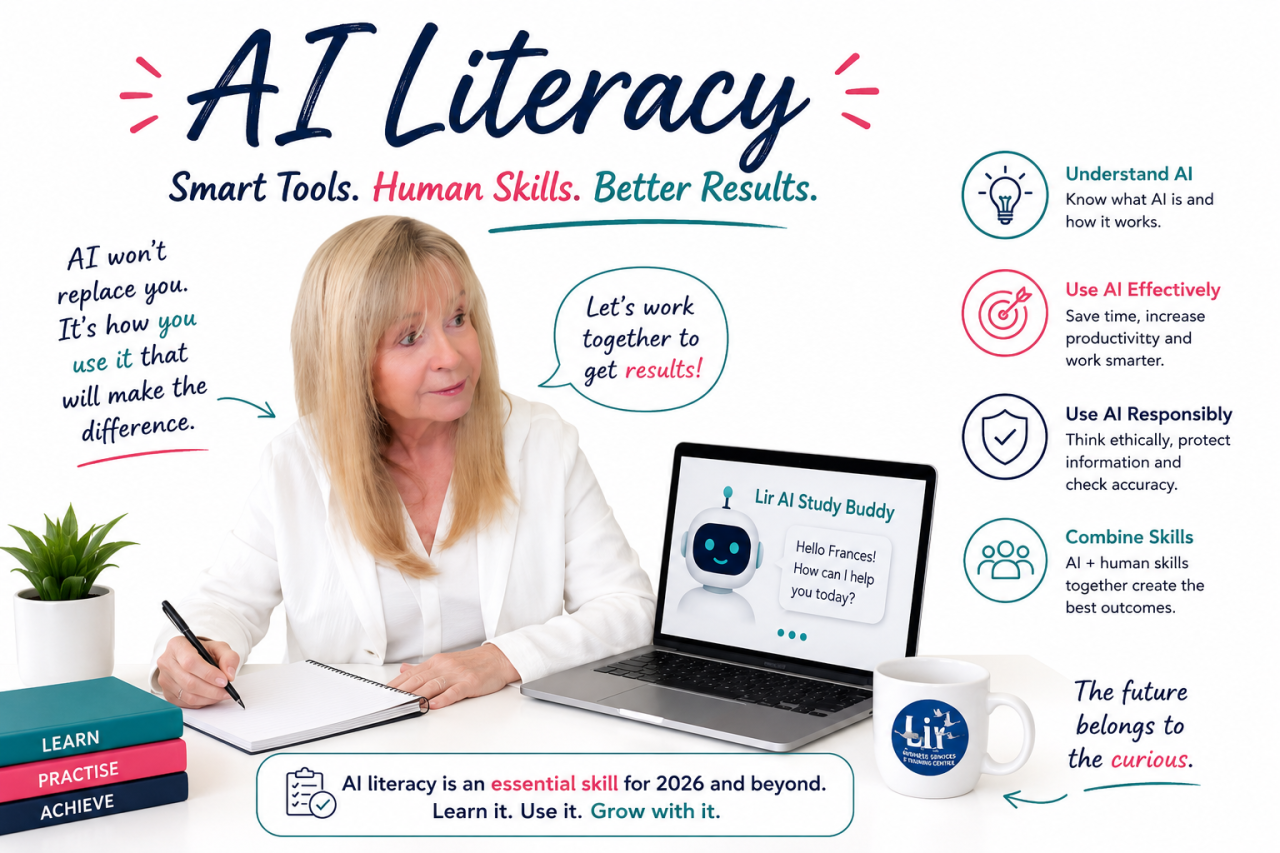
But what we're increasingly seeing is that AI is becoming another workplace tool, much like email, spreadsheets, or the internet itself.
Think about it. Most of us wouldn't dream of working without email today. Yet there was a time when email was new and unfamiliar. AI is following a similar path. Employers are not necessarily looking for AI experts. What they are looking for are people who understand how to use AI responsibly and effectively. This might include:
- Using AI to help draft documents - Imagine you're creating a report. AI might help create the first draft in seconds, but it still takes a person to check the facts, improve the wording and make sure the information is accurate.
- Researching information more efficiently
- Generating ideas and solutions
- Improving productivity
- Automating routine tasks
- Checking and refining work
However, there's something important to remember.
AI can assist us, but it cannot replace human judgment, experience, empathy, communication, or common sense. We still need people who can think critically, solve problems, and make decisions.
In many ways, AI is making human skills even more valuable.
If everyone has access to the same technology, then communication, teamwork, adaptability and confidence become the qualities that help people stand out.
Perhaps one of the most important workplace skills in 2026 is learning how to work alongside AI rather than being afraid of it.
Understanding how to use AI effectively and responsibly is becoming just as important as using email or spreadsheets.
That's why we've introduced the Lir AI Study Buddy to support learners as they develop confidence with modern workplace technologies.
8. Digital Skills
Imagine walking into a modern office thirty years ago.
- Video meetings.
- Cloud storage.
- Online collaboration tools.
- Artificial Intelligence.
Most people would have thought they'd entered a science fiction film. Today, digital skills are essential. Employers increasingly expect people to feel comfortable using:
- Word Processing
- Spreadsheets
- Email systems
- Online collaboration tools
- Customer databases
- AI-assisted technologies
The workplace continues to change, and digital confidence has become a valuable skill in almost every sector.
Digital skills such as Word Processing or Advanced Word Processing, Spreadsheets or Advanced Spreadsheets, and Information & Administration have become essential in today's workplace.
9. Adaptability
Perhaps the most important skill of all is adaptability. The ability to learn, adjust and embrace change. The world of work today looks very different from twenty years ago aAnd twenty years from now, it will look different again. That's why lifelong learning has become so important.
As management expert Peter Drucker famously said:
"The greatest danger in times of turbulence is not the turbulence—it is to act with yesterday's logic."
The people who continue learning often place themselves in the strongest position for future opportunities.
So What Should Schools Teach?
Now here's an interesting question. If schools started again tomorrow, what additional subjects might we include?
Perhaps:
- Financial literacy
- Interview skills
- Communication
- Emotional intelligence
- Digital skills
- Customer service
- Time management
- Problem-solving
- Career planning
Of course, schools can't teach everything. That responsibility belongs to all of us throughout our lives. Learning doesn't end when school finishes. In many ways, that's where the real learning begins.
The World Economic Forum regularly highlights analytical thinking, resilience, flexibility and lifelong learning as key future workplace skills.
Skills Employers Value Most
| Skill | Why It Matters |
|---|---|
| Communication | Builds relationships and trust |
| Time Management | Improves productivity |
| Problem-Solving | Helps organisations overcome challenges |
| Teamwork | Supports collaboration |
| Confidence | Encourages initiative |
| Emotional Intelligence | Improves workplace relationships |
| Digital Skills
AI Literary | Meets modern workplace requirements
Helps people work effectively with emerging technologies |
| Adaptability | Supports long-term career success |
Frequently Asked Questions
What are employability skills?
Employability skills are transferable skills that help people succeed in work, regardless of industry or job title.
Why do employers value soft skills?
Soft skills help people communicate, collaborate and solve problems effectively, making them valuable in any workplace.
Can adults develop these skills?
Absolutely. Many people develop these skills through training, work experience, volunteering and lifelong learning opportunities.
Which skill is most important?
There is no single answer, but communication, adaptability and problem-solving consistently rank highly with employers.
In Conclusion
I suppose if schools tried to teach every skill we'd ever need in life, we'd still be there. The reality is that learning continues long after we leave the classroom. The skills employers value most are often the ones we develop through experience, practice and ongoing education.The encouraging news is that none of these skills are reserved for a lucky few.
- They can all be learned.
- They can all be improved.
And they can all help create new opportunities.
Whether you're returning to education, building your confidence, changing careers or simply looking to keep your skills up to date, investing in your learning is rarely time wasted.
Because sometimes the most valuable lessons are the ones we learn after school has ended.
Perhaps algebra and trigonometry weren't wasted after all.
But if schools started again tomorrow, I suspect many of us would vote for a few extra lessons on communication, confidence, problem-solving and adaptability.
After all, these are the skills many of us use every single day.
And who doesn't want more of those?
If you'd like to develop practical workplace skills, gain a recognised qualification, or boost your confidence for today's job market, we'd be delighted to support you at Lir Business Services & Training Centre.
Categories: : Blended, Fully Online Course, Level 5 Course, Level 6 Course
Discover why bookkeeping qualifications have mattered for over 5,000 years and why they remain one of today's most valuable business ...
Discover why bookkeeping qualifications have mattered for over 5,000 years and why they remain one of today's most valuable business skills.
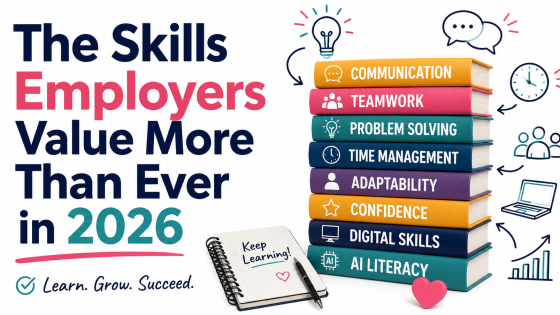
The Skills Nobody Taught Us at School (But Employers Still Want) ...
Take a nostalgic trip back to the outdoor games Irish children played from the 1970s to the early 2000s and discover the lessons they ...
I thought we'd look at something that affects almost every learner at some stage today.
Already training others? Learn what a recognised Train-the-Trainer qualification really means and when a QQI Level 6 course makes sense.
If you are interested in receiving updates on upcoming Lir Blog posts
Register below and we will send you an email when the next one is published.
I have read and agree to the terms & conditions.