Childhood Games We Played Outdoors in Ireland: Growing Up Before Screens Took Over
 Frances Gallagher
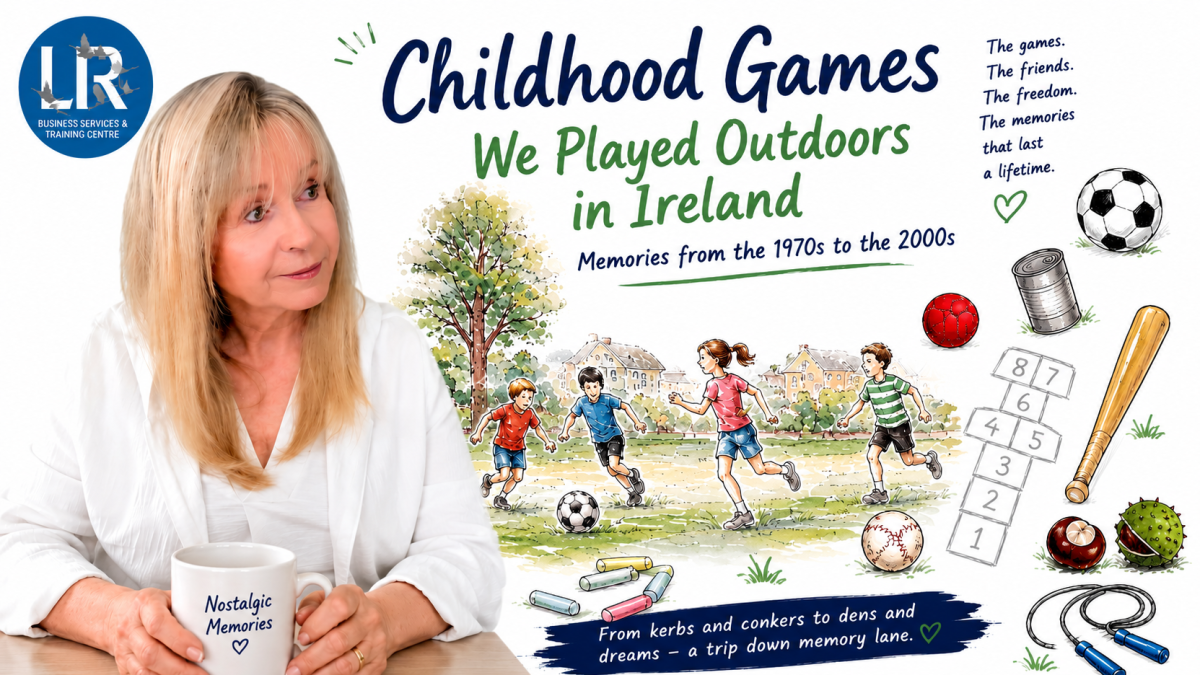
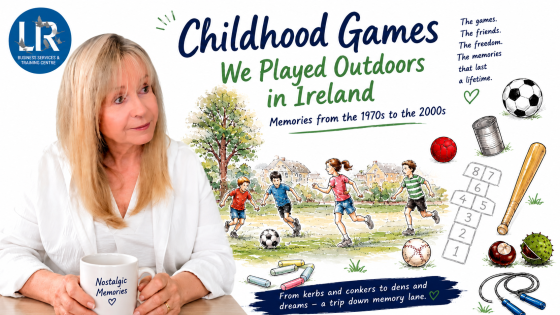
Take a nostalgic trip back to the outdoor games Irish children played from the 1970s to the early 2000s and discover the lessons they taught us.
Childhood Games We Played Outdoors in Ireland: Growing Up Before Screens Took Over
I thought what I'd do today is take us back to a different Ireland.
An Ireland where a mobile phone was attached to a wall.
An Ireland where "Google it" wasn't a phrase.
An Ireland where if your mother wanted you home, she stood at the front door and shouted your name loud enough for half the parish to hear.
Can you remember it?
If you grew up in Ireland during the 1970s, 1980s, 1990s or even the early 2000s, chances are your childhood was spent outdoors.
- Not because somebody organised it
- Not because there was a timetable
- Simply because that's where everyone was
The minute homework was finished, we were out the door.
And often you stayed out until dark or when the streetlights came on.
Looking back now, it wasn't just fun.
Those games taught us confidence, communication, teamwork and problem-solving long before we ever heard those words used in schools or workplaces.
Many of these same skills continue to be developed through structured learning, including our QQI certified Communications Level 5, Communications Level 6, and Leadership Level 6 Courses.
Living in the Country, or in the Estate was our Adventure Playground
Most of us didn't need expensive toys.
The entire neighbourhood became our playground.
- Roads became race tracks
- Walls became sports arenas
- Trees became climbing frames
- Fields became kingdoms
And somehow, every estate had that one mysterious patch of bushes, or a fairy fort if living in the country that became a secret headquarters.
The amazing thing was that children organised everything themselves.
- No apps
- No booking systems
- No WhatsApp groups
Just one child shouting:
"Are ye coming out?"
Within minutes, a game was underway.
Hide and Seek, 40-40 and Kick the Can
Few games bring back memories quite like Hide and Seek.
The rules were simple.
- One person counted.
- Everybody else disappeared.
The challenge wasn't just finding a hiding place.
It was finding one that wouldn't be discovered for an hour.
Then came 40-40:
For many Irish children, this was Hide and Seek with added excitement.
Players had to sneak back to a base while avoiding being spotted.
There was strategy involved.
- Planning
- Timing
Occasionally, a dramatic sprint from behind a hedge.
Kick the Can added another level altogether:
A simple tin can became the centre of the universe.
One well-aimed kick could free everyone.
It felt like something from an action movie.
At least it did when you were ten years old.
Bulldog: The Game That Defined a Generation
Let's be honest.
Every generation seems to have one game that adults today look back on and wonder how it was ever allowed.
For many Irish children, that game was Bulldog.
Players ran from one side of the playground to the other while avoiding being caught.
- Simple.
- Energetic.
- Completely chaotic.
Yet every lunchtime and every summer evening, we lined up ready for another round.
The game required speed, courage and determination.
Possibly a spare jumper too.
Kerbs: The Unofficial National Sport
Ask Irish adults about childhood games and one answer appears again and again. This game hopped up in the Lir Learner Community this week, when I asked the question.
Kerbs:
- A football.
- Two kerbs.
- Hours of entertainment
The aim was to throw the ball against the opposite kerb and score points when it bounced back.
That was it.
- Simple but strangely addictive
- Championships emerged
- Neighbourhood legends were created
- Friendships were tested
And occasionally, footballs landed in gardens that required delicate diplomatic negotiations to retrieve the ball, or your Mammy had to go out to retrieve it!
Football Games Beyond Football
Not every game required full teams.
Sometimes all you needed was a ball and a few friends.
Popular favourites included:
- Heads and Volleys
- Keepy-Uppies
- Penalty Shoot-Outs
- Wall Ball
- Piggy in the Middle
- One Bounce
- Handball
Handball against a gable wall could keep us occupied for hours.
Keepy-Uppies became a measure of status.
Everyone knew somebody who claimed they could do 100!
Nobody ever actually witnessed it.
Hopscotch, Elastics and Skipping
Many of Ireland's most skilful playground games involved rhythm and coordination.
Again, we spent hours playing:
- Hopscotch
- Elastics
- French Skipping
- Skipping Rope
- Double Dutch
Squares were drawn on footpaths using chalk, or small stones were arranged in a make-shift school playground.
Elastic bands appeared from nowhere.
Skipping rhymes were passed from one generation to the next.
Several ropes were tied together to make a giant skipping rope.
Nobody watched a tutorial.
Somebody showed you how.
Then you practised until you mastered it.
What's the Time Mr Wolf?
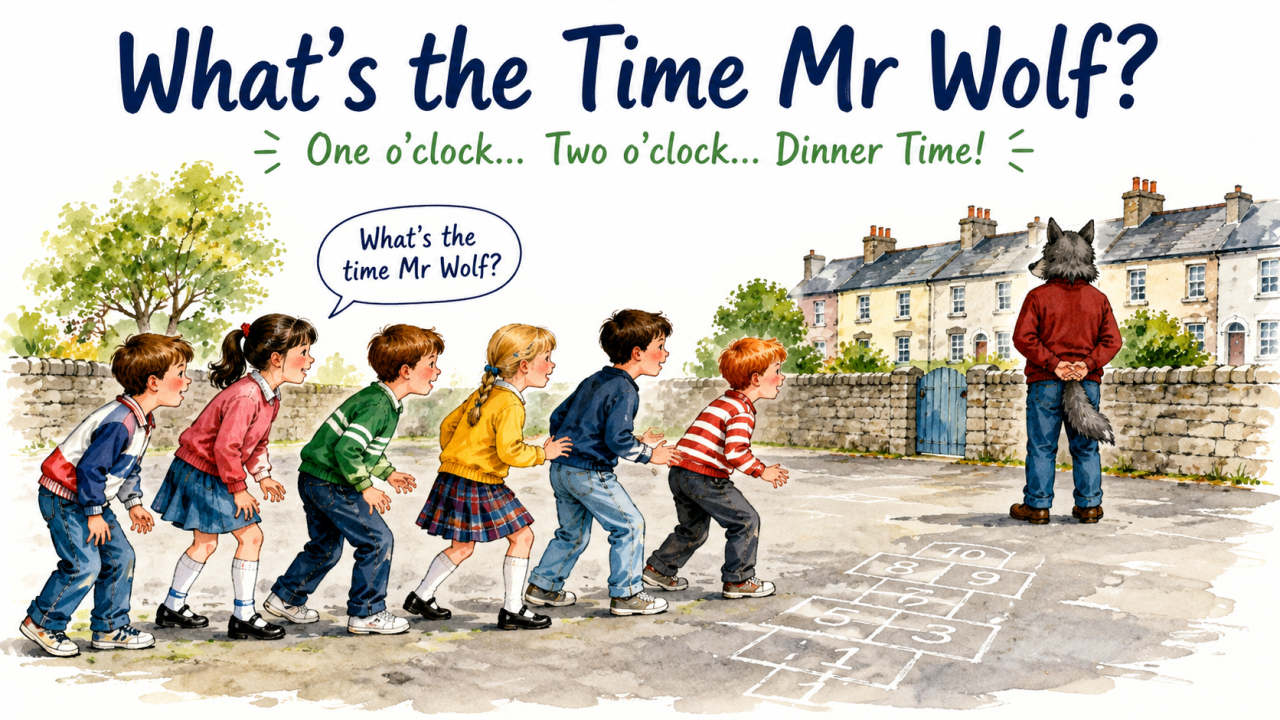
School playgrounds across Ireland were full of traditional games that have survived for generations.
Among the favourites I've heard of were:
- What's the Time Mr Wolf?
- Grandmother's Footsteps
- Red Light, Green Light
- Simon Says
- Statues
- Follow the Leader
- Red Rover
These games required very little equipment but plenty of imagination.
The suspense of waiting for Mr Wolf to turn around was enough to keep an entire school entertained.
Rounders and School Sports Days
Many of us first experienced team sports through games like:
- Rounders
- Cat and Mouse
- Duck, Duck, Goose
- Queenie I O
Sports Days became major annual events.
Parents appeared with cameras.
Teachers became referees.
Children became Olympic athletes for one afternoon.
Well, at least in their own minds.
The Age of Imagination
Before gaming consoles became common, we created our own adventures.
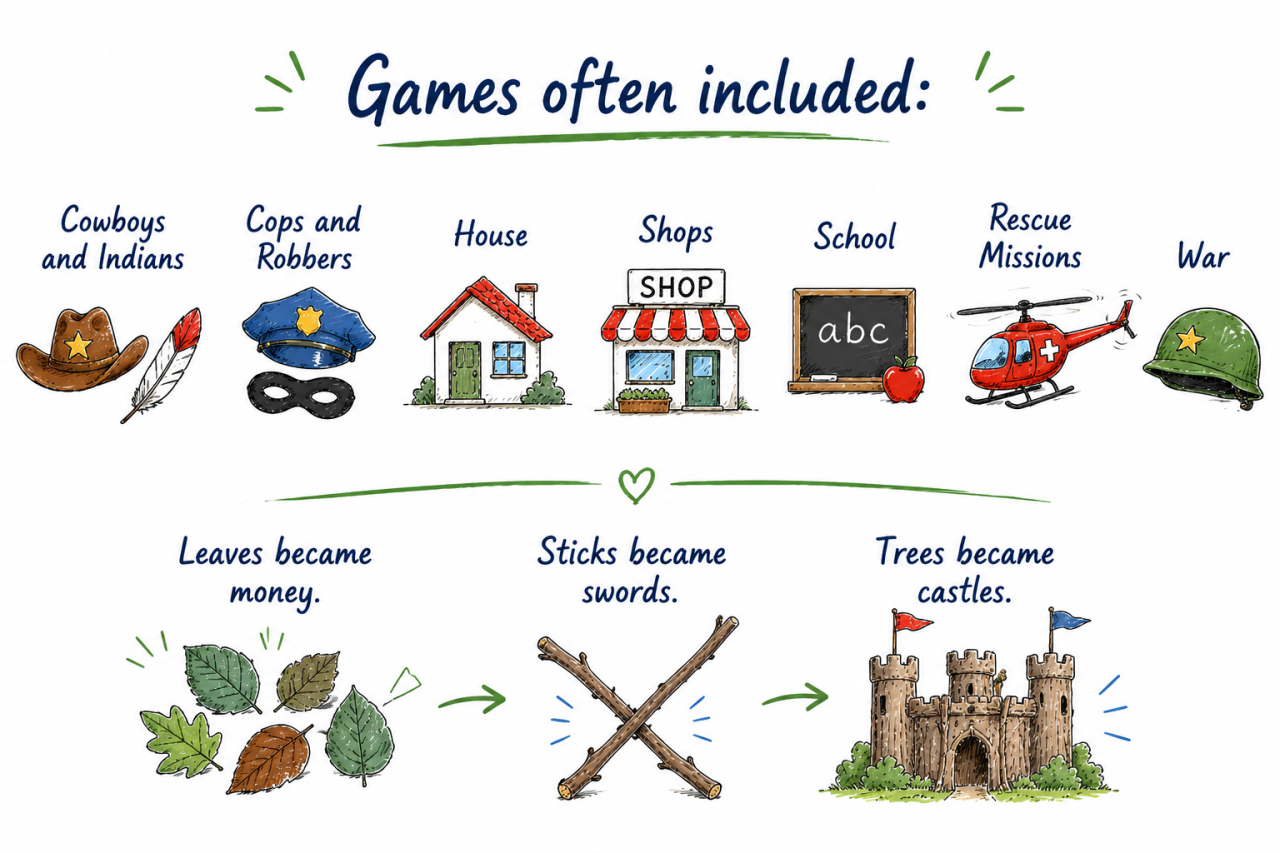
Games often included:
- Cowboys and Indians
- Cops and Robbers
- House
- Shops
- School
- Rescue Missions
Leaves became money.
Sticks became swords.
Trees became castles.
Every child was an actor, director and storyteller at the same time.
Building Dens and Exploring the World
Some of the greatest childhood adventures involved no formal game at all.
We just spent hours:
- Building dens
- Climbing trees
- Collecting conkers
- Picking blackberries
- Exploring fields
- Following treasure hunts
Looking back, these activities taught independence.
- We solved problems.
- We made decisions.
- We took responsibility.
Even if that responsibility occasionally involved explaining how a jumper got torn while climbing a tree.
Bikes, Roller Skates and Homemade Thrills
Owning a bike felt like freedom.
Summer afternoons were filled with:
- Bike races
- Bike jumps
- Follow My Leader
- Scooter challenges
- Roller skating
- Homemade go-kart races
Every slope became a racetrack.
Every homemade ramp seemed like a brilliant idea at the time.
Parents often disagreed.
What These Games Were Really Teaching Us
Here's something interesting.
At the time, we thought we were simply having fun.
But what were we actually learning?
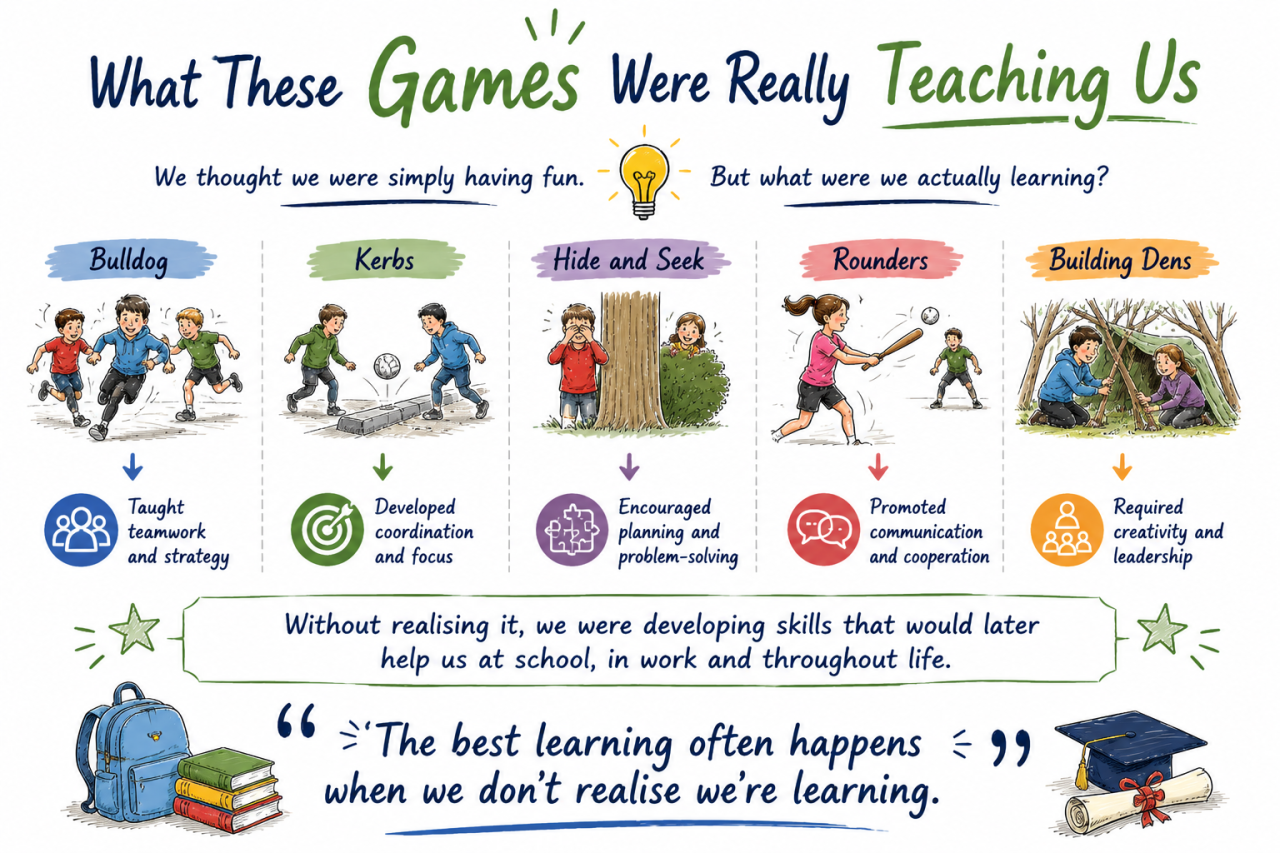
Isn't that a great quote ... 'The best learning often happens when we don't realise we're learning.'
Think about it.
- Bulldog taught teamwork and strategy
- Kerbs developed coordination and focus
- Hide and Seek encouraged planning and problem-solving
- Rounders promoted communication and cooperation
- Building dens required creativity and leadership
Without realising it, we were developing skills that would later help us at school, in work and throughout life.
| Childhood Game | What It Taught Us |
|---|---|
| Bulldog | Teamwork and strategy |
| Kerbs | Focus and coordination |
| Hide and Seek | Planning and problem-solving |
| Rounders | Communication and cooperation |
| Building Dens | Creativity and leadership |
Why Games Still Matter for Adult Learning
Now, you might be wondering what childhood games have to do with adult education here in Lir.
Quite a lot, actually.
Many of the most effective training methods used today are built on the same principles.
Adults learn best when they are actively involved.
Looking back now, educational experts have spent decades studying something children seemed to understand naturally.
Educational theorists such as Kolb, Knowles and Dewey have long argued that people learn best through experience, participation and reflection. In many ways, our childhood games were teaching us these lessons long before we ever entered a classroom
That's why good classroom and online training often includes:
- Interactive quizzes
- Team challenges
- Problem-solving activities
- Role plays
- Group discussions
- Scenario-based exercises
- Gamified learning activities
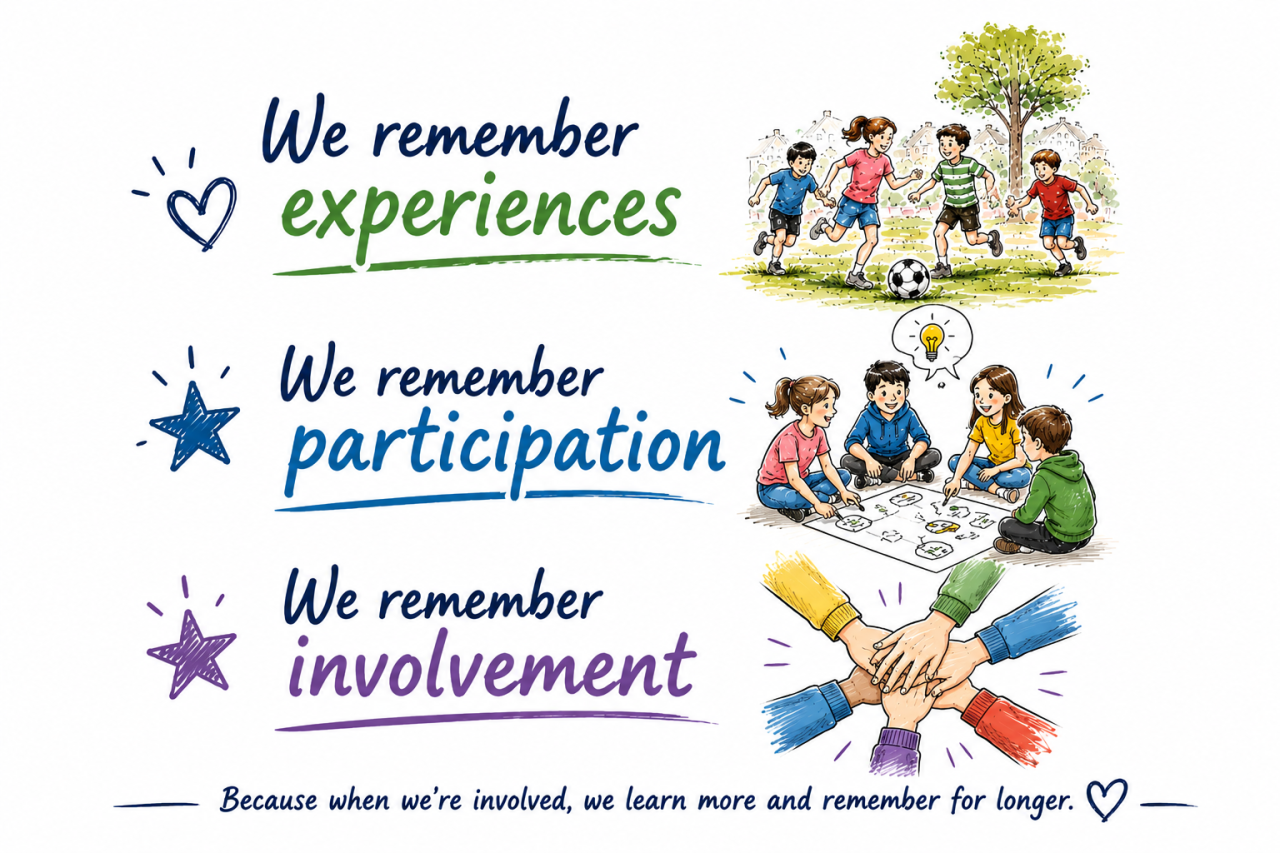
We learn best when we are involved.
We learn best when we're participating.
We learn best when we're doing.
The same reason many of us still remember a game of 40-40 from 30 years ago is the same reason interactive learning works so well today.
Whether you're eight years old playing 'What's the Time Mr Wolf' or an adult learner completing an online challenge, active participation helps information stick.
That's why our learners don't simply read information. Through our Blended 'Live' Tutor Online Classes, or Fully Online Learning option. Imagine having support available when you need it. Today's learners have tools such as the Lir AI Study Buddy to help reinforce learning, answer questions and build confidence. Learners actively engage with their course material. Go to any of our courses on Lir Business Services & Training Centre and you will see a 'Blended 'Live' Tutor Online option, and a 'Fully Online/Self-paced option.
Other Things We Remember
- The Angelus means you had to go in soon
- Calling to a friend's house without texting first
- "Mam says you can stay out for another half hour"
- Ice cream vans appearing like magic
- Bringing sandwiches on adventures
- Getting soaked in rain and pretending you weren't cold
- Returning home with grass stains and muddy shoes
Frequently Asked Questions
What were the most popular outdoor games in Ireland?
Kerbs, Bulldog, Hide and Seek, 40-40, Rounders, Hopscotch, Elastics, Conkers, Piggy in the Middle and What's the Time Mr Wolf were among the most popular.
Did children really play outside all day?
Yes. Many children spent hours outdoors after school, at weekends and throughout the summer holidays.
Why are these games remembered so fondly?
They created friendships, independence, confidence and a sense of adventure that many people still remember decades later.
In Conclusion
When people talk about childhood memories in Ireland, they rarely talk about possessions.
They talk about people.
- Friends.
- Neighbours.
- Games.
- Adventures.
- Laughter.
Whether it was a game of Kerbs on a quiet road, a Rounders match in a field, a daring climb up a tree, or a frantic race back in time for tea-time, these moments became part of our story.
The technology may have changed.
The world may have changed.
But the lessons remain the same.
- We learn through doing.
- We learn through participation.
- We learn through connection.
Perhaps the greatest gift these games gave us wasn't the entertainment.
- It was the confidence to make friends.
- The ability to solve problems.
- The courage to try something new.
- The resilience to keep going when things didn't work out.
Looking back, we thought we were simply playing.
In reality, we were learning skills that would stay with us for life.
And perhaps that's why so many of us still smile when somebody mentions Red Rover, Kerbs or Hide and Seek.
For a moment, we're right back there again, running home in the pitch dark in the direction of our house or when the streetlights came on.
If you're reading this, why not take a moment and think back.
What was your favourite childhood game?
- Was it Kerbs?
- Bulldog?
- Hide and Seek?
- Rounders?
- Building dens in the woods?
We'd love to hear your memories.
Continue Your Learning Journey
Whether your favourite game was Kerbs, Bulldog, Skipping, Rounders or building dens in the woods, one thing is clear: we never really stop learning.
If you're thinking about developing new skills, gaining a qualification, changing career direction or simply building your confidence, we'd love to support you.
Explore our range of QQI-accredited courses, Fully Online Learning options and Live Tutor Online classes at: Lir Business Services & Training Centre
Categories: : Blended, Fully Online Course, Level 5 Course, Level 6 Course, QQI, Training
Discover why bookkeeping qualifications have mattered for over 5,000 years and why they remain one of today's most valuable business ...
Discover why bookkeeping qualifications have mattered for over 5,000 years and why they remain one of today's most valuable business skills.
The Skills Nobody Taught Us at School (But Employers Still Want) ...
Take a nostalgic trip back to the outdoor games Irish children played from the 1970s to the early 2000s and discover the lessons they ...

I thought we'd look at something that affects almost every learner at some stage today.

Already training others? Learn what a recognised Train-the-Trainer qualification really means and when a QQI Level 6 course makes sense.
If you are interested in receiving updates on upcoming Lir Blog posts
Register below and we will send you an email when the next one is published.
I have read and agree to the terms & conditions.